The habits of happiness
What is happiness, and how can we all get some? Biochemist turned Buddhist monk Matthieu Ricard says we can train our minds in habits of well-being, to generate a true sense of serenity and fulfillment.
Esplora il contenutoCAPIVERSO / Video
Esplora l’inglese al tuo ritmo. Leggi, ascolta e impara, una scoperta alla volta.
 ▶
What is happiness, and how can we all get some? Biochemist turned Buddhist monk Matthieu Ricard says we can train our minds in habits of well-being, to generate a true sense of serenity and fulfillment.
 ▶
Backed by stunning illustrations, David Christian narrates a complete history of the universe, from the Big Bang to the Internet, in a riveting 18 minutes. This is "Big History": an enlightening, wide-angle look at complexity, life and humanity, set against our slim share of the cosmic timeline.
 ▶
"Tipping Point" author Malcolm Gladwell gets inside the food industry's pursuit of the perfect spaghetti sauce -- and makes a larger argument about the nature of choice and happiness.
 ▶
Hugh Herr is building the next generation of bionic limbs, robotic prosthetics inspired by nature's own designs. Herr lost both legs in a climbing accident 30 years ago; now, as the head of the MIT Media Lab’s Biomechatronics group, he shows his incredible technology in a talk that's both technical and deeply personal — with the help of ballroom dancer Adrianne Haslet-Davis, who lost her left leg in the 2013 Boston Marathon bombing, and performs again for the first time on the TED stage.
 ▶
Rita Pierson, a teacher for 40 years, once heard a colleague say, "They don't pay me to like the kids." Her response: "Kids don't learn from people they don't like.'" A rousing call to educators to believe in their students and actually connect with them on a real, human, personal level.
 ▶
Ric Elias had a front-row seat on Flight 1549, the plane that crash-landed in the Hudson River in New York in January 2009. What went through his mind as the doomed plane went down? At TED, he tells his story publicly for the first time.
 ▶
"The opposite of depression is not happiness, but vitality, and it was vitality that seemed to seep away from me in that moment." In a talk equal parts eloquent and devastating, writer Andrew Solomon takes you to the darkest corners of his mind during the years he battled depression. That led him to an eye-opening journey across the world to interview others with depression -- only to discover that, to his surprise, the more he talked, the more people wanted to tell their own stories.
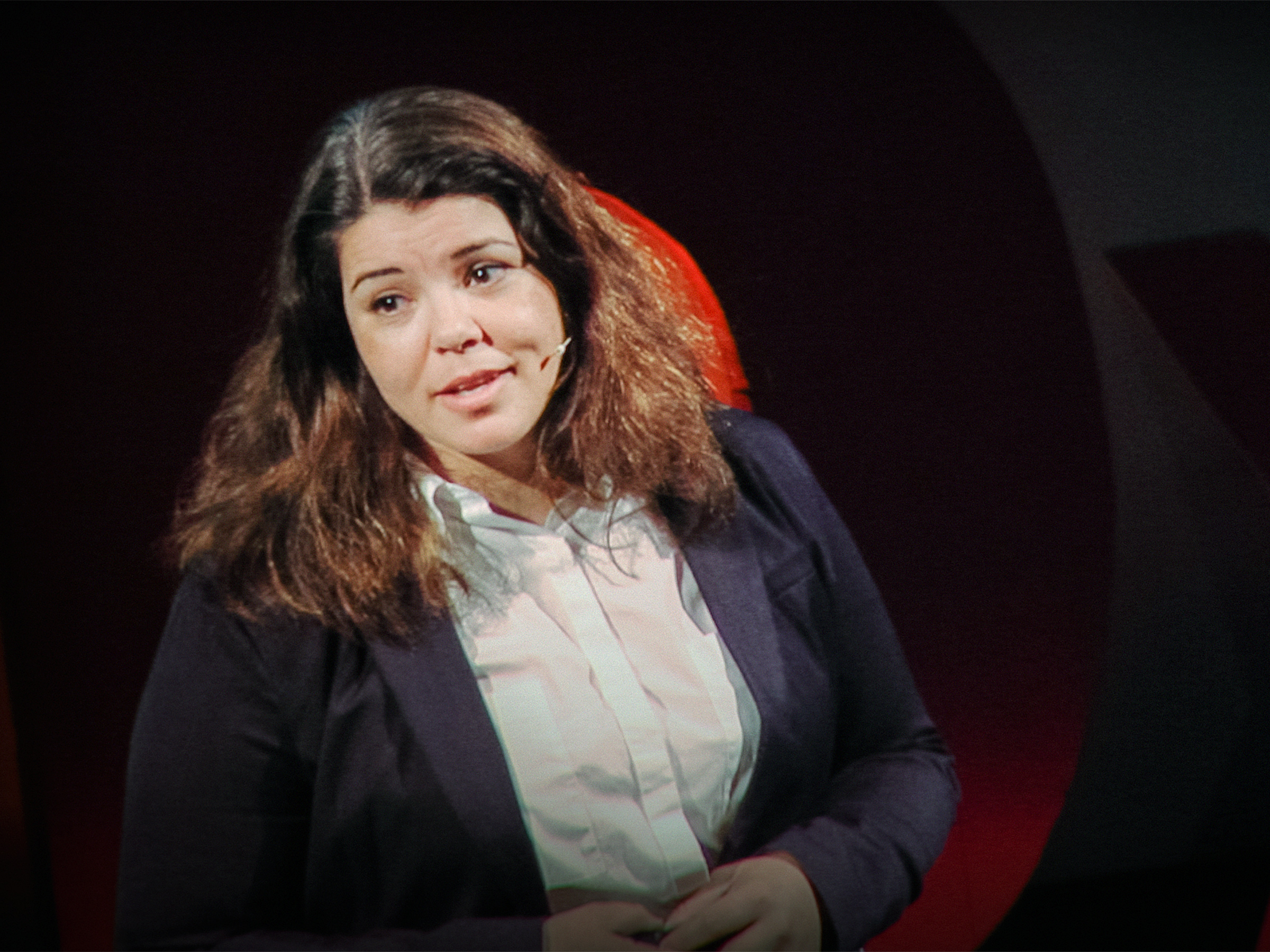 ▶
When your job hinges on how well you talk to people, you learn a lot about how to have conversations -- and that most of us don't converse very well. Celeste Headlee has worked as a radio host for decades, and she knows the ingredients of a great conversation: Honesty, brevity, clarity and a healthy amount of listening. In this insightful talk, she shares 10 useful rules for having better conversations. "Go out, talk to people, listen to people," she says. "And, most importantly, be prepared to be amazed."
 ▶
We live in a world of unseeable beauty, so subtle and delicate that it is imperceptible to the human eye. To bring this invisible world to light, filmmaker Louie Schwartzberg bends the boundaries of time and space with high-speed cameras, time lapses and microscopes. At TED2014, he shares highlights from his latest project, a 3D film titled "Mysteries of the Unseen World," which slows down, speeds up, and magnifies the astonishing wonders of nature.
 ▶
Iranian-American comedian Maz Jobrani takes to the TEDxSummit stage in Doha, Qatar to take on serious issues in the Middle East -- like how many kisses to give when saying “Hi,” and what not to say on an American airplane.
 ▶
Russell Foster is a circadian neuroscientist: He studies the sleep cycles of the brain. And he asks: What do we know about sleep? Not a lot, it turns out, for something we do with one-third of our lives. In this talk, Foster shares three popular theories about why we sleep, busts some myths about how much sleep we need at different ages -- and hints at some bold new uses of sleep as a predictor of mental health.
 ▶
What really causes addiction -- to everything from cocaine to smart-phones? And how can we overcome it? Johann Hari has seen our current methods fail firsthand, as he has watched loved ones struggle to manage their addictions. He started to wonder why we treat addicts the way we do -- and if there might be a better way. As he shares in this deeply personal talk, his questions took him around the world, and unearthed some surprising and hopeful ways of thinking about an age-old problem.
Solo un momento per preparare tutto per te.
Ti invieremo un codice di conferma. Se non arriva, controlla la cartella della posta indesiderata.
Enviaremos um código de confirmação para o seu e-mail.
Atenção ao Spam: caso não apareça na caixa de entrada em instantes, confira sua pasta de Spam ou Lixo Eletrônico!
Inserisci il codice di sei cifre che ti abbiamo inviato. Se non arriva, controlla la cartella spam.
Caricamento...
Conosci gli amici virtuali disponibili per il tuo profilo.
Clicca su un amico nell'elenco per visualizzare i messaggi e chattare.
Lingua che desideri parlare
La risposta della chiamata apparirà qui.
Usa il nome, lo slug o il codice per trovare una stanza.
Tocca per parlare
...
Inserisci fino a 100 parole inglesi separate da virgole o a capo. Le traduciamo e le aggiungiamo al tuo vocabolario.
Controlla le parole e le traduzioni di questo foglio. Verranno aggiunte al tuo dizionario solo quando fai clic su Aggiungi al dizionario.
Anteprima
| inglese |
|---|
Ripeti la frase

Per giocare di nuovo, seleziona Nuova partita.
Sfida di parole per categoria

Scegli la lingua e gioca una serie di parole contro un Capibot.
Tema del turno
Preparati…
Scrivi una parola inglese che inizi con questa lettera
Ciao! Voglio aiutarti a imparare al tuo ritmo.
Scegli l’opzione più adatta a te.
Non preoccuparti: potrai cambiarlo più avanti e ti consiglierò le migliori attività per te.


Traduci le parole il più velocemente possibile! Ad ogni 5 risposte corrette consecutive, guadagni +2 secondi.
Che ne dici di esplorare altre sfide nel frattempo? 🚀
Hai indovinato
Che ne dici di esplorare altre sfide nel frattempo? 🚀
Impara l’inglese a ritmo di musica
Scegli uno stile, esercita il vocabolario e lasciati guidare dalla musica.
Colpisci le note con A S D F o i pulsanti colorati. Scegli le traduzioni con H J K L o fai clic sulla risposta.

Tocca per parlare
Esercitati nella lettura, ascolto, conversazione e scrittura. Rivedi le risposte e comprendi ogni correzione.